GPU Architect: Skills, Career Paths & Surging Demand
21 May, 2026


AI infrastructure expansion is accelerating at an extraordinary pace. As explored in our pre...

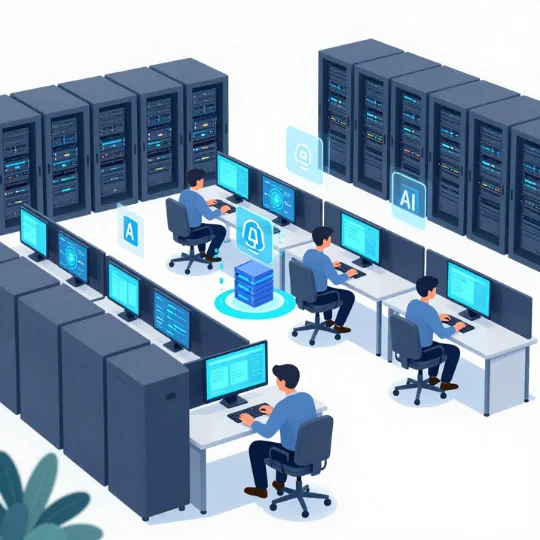
AI infrastructure expansion is accelerating at an extraordinary pace. As explored in our previous article around power and cooling constraints, energy availability and thermal management are already shaping where facilities can be built. Grid capacity, liquid cooling adoption and rack density are redefining the physical boundaries of AI deployment.
But infrastructure constraints do not end with energy.
A second bottleneck is emerging, quieter, less visible, yet potentially more decisive:
Talent.
While GPU clusters grow more powerful and hyperscale AI campuses expand globally, the workforce capable of designing, deploying and operating these environments is not scaling at the same speed. This imbalance is shifting from an operational challenge to a strategic risk.
AI-driven data centres are not simply upgraded versions of traditional facilities; they represent a structural shift in complexity.
High-density GPU clusters demand advanced electrical engineering. Distributed training environments require sophisticated orchestration. AI networking fabrics operate at ultra-low latency thresholds where even minor inefficiencies directly impact model performance.
Increasingly, these layers require convergence.
We are seeing a move away from isolated skill sets toward a new category of full-stack infrastructure professionals who understand the interplay between liquid cooling systems, high-speed networking, AI power management and automation-led operations.
The challenge is no longer depth in one discipline.
It is the ability to operate across them.
This convergence is not theoretical.
At MWC Barcelona 2026, the dominant theme has been the transition into what many are calling the “IQ Era” a shift from simple connectivity toward agentic AI systems capable of autonomously managing and healing networks.
Yet industry leaders have consistently highlighted a critical friction point.
The barrier to fully autonomous infrastructure is no longer purely technological. It is human.
As networks move toward Level 4 and Level 5 autonomy, decision reliability depends on the quality of the data, policy frameworks and human oversight layers guiding those systems. Intelligent infrastructure still relies on specialised expertise to design, supervise and optimise it.
In other words, as infrastructure becomes more intelligent, the requirement for high-calibre human intelligence increases, not decreases.
It would be convenient to assume that the current shortage is temporary, simply a lag between technological advancement and workforce adaptation.
The reality is more structural.
Few professionals have historically been trained to operate simultaneously across high-performance computing, advanced networking, automation engineering and power-dense infrastructure design. AI infrastructure demands convergence, and convergence takes time to build.
Universities are only beginning to adapt curricula to reflect the requirements of AI-driven environments. Upskilling programmes are expanding, but they cannot keep pace with hyperscale infrastructure investment.
The data reinforces this imbalance.
According to the World Economic Forum Future of Jobs Report 2025, AI and machine learning specialists remain among the fastest-growing roles globally. The report also highlights that nearly 39 per cent of core job skills are expected to change by 2030 - a clear signal of how rapidly the capability landscape is shifting.
Yet the infrastructure expertise required to support AI workloads, spanning power-dense design, high-performance networking and advanced automation, remains even more specialised and significantly less abundant.
The result is intensifying competition, not just between companies, but between regions.
The United States continues to dominate hyperscale AI deployment. Northern Europe is leveraging renewable energy advantages to attract sustainability-led builds. Across APAC, countries such as Singapore and Malaysia are strengthening their AI infrastructure ecosystems.
But talent supply does not scale evenly across these markets.
This creates a new strategic reality: infrastructure planning must now account for workforce mobility as much as grid capacity.
The first phase of AI scaling focused on hardware.
The next phase will focus on human capital.
In the “IQ Era”, the defining question is no longer only: Where will the power come from?
It is increasingly: Who has the skills to operate the systems that power AI itself?
In the years ahead, that may prove to be the most decisive constraint of all.
If your organisation is scaling AI infrastructure and facing complex hiring challenges across power, networking or automation-led environments, strategic talent planning is now part of infrastructure strategy.
Our Data Centre team works with organisations building the next generation of AI environments, helping them identify, attract and secure the specialist expertise required to deliver at scale.
Whether you are expanding your team or exploring your next move in AI infrastructure, speak with our specialists to understand where the market is heading.