Germany’s Data Center Market: Operators Shaping Growth
07 October, 2026


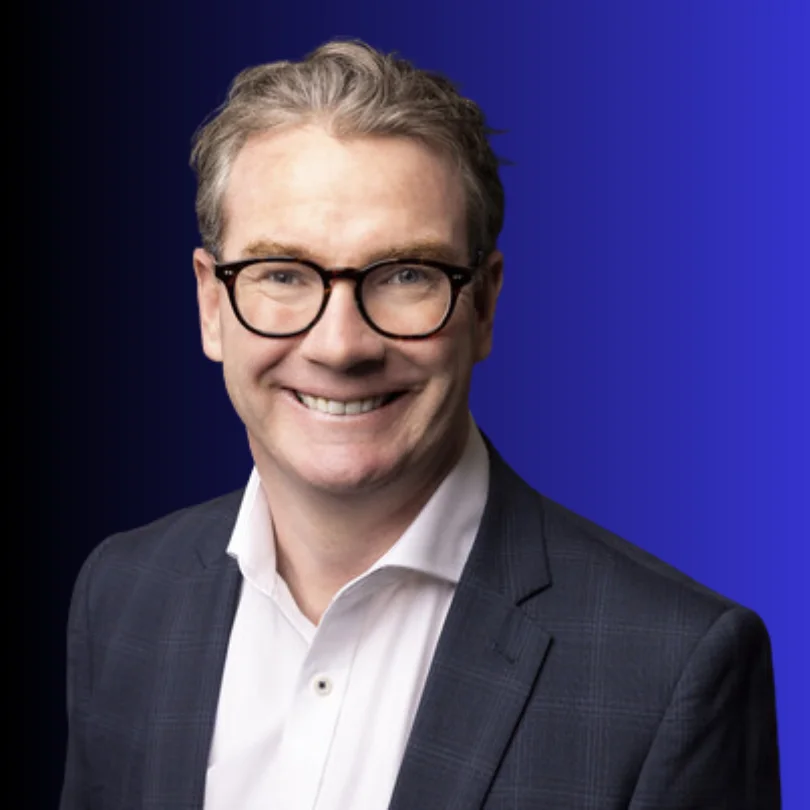
Not every career follows the path originally imagined. Sometimes, the experiences that take us in a completely different direction become the very things that shape our future success.
For Paul Tucker, Chief Commercial Officer at Rapid Circle, that journey began with a dream of becoming a professional footballer. Although his ambitions on the pitch didn't work out as planned, the discipline, competitiveness and resilience he developed through sport would prove invaluable in an entirely different arena: technology sales.
In this episode of The Route to Networking Podcast, Paul joins host Till Heinimann to reflect on his unconventional career journey, the lessons he's learned about leadership and why curiosity, adaptability and human connection remain essential in an increasingly AI-driven industry.
Long before his career in technology, Paul had his sights set on professional football. He travelled to England to pursue that ambition, but when things didn't work out, he returned to Australia facing the question of what came next.
Fortunately, sales wasn't entirely unfamiliar territory.
Paul grew up surrounded by salespeople. His grandfather was a travelling salesman, while his father worked in the photographic industry, eventually running studios and hiring out equipment and space.
When his football ambitions ended, his parents encouraged him to find work. He landed a role in the emerging mobile phone industry, selling handsets and phone plans to small and medium-sized businesses.
Reflecting on how it all began, Paul admits:
"Probably more good luck than management, to be honest."
But he quickly discovered that sales shared many similarities with sport. The targets, discipline and competitive nature of the profession appealed to someone accustomed to working towards measurable goals.
"I could see how you follow this process and it results in an outcome and in a win, if you like."
The biggest adjustment was moving from a team sport, where success was shared, into an environment where individual performance was constantly measured.
Rather than dwelling on what he'd left behind, Paul focused on learning from experienced colleagues who became valuable mentors.
He soon recognised the long-term opportunities technology offered, particularly as businesses became increasingly dependent on IT services and solutions.
What had begun almost by chance was becoming a career with genuine potential.
As Paul's career progressed, he became increasingly interested in understanding how businesses operated beyond the sales function.
He recognised that salespeople often have a unique perspective because they work directly with customers, creating opportunities to collaborate across departments and develop broader commercial knowledge.
When he decided to pursue leadership, he deliberately moved from new business development into account management.
One of his most significant opportunities came when he relocated with his family to Singapore for four years to manage a major global customer account.
The role exposed him to financial responsibility, service delivery, pre-sales, account growth and managing people across different functions.
It also meant becoming the person accountable when things didn't go according to plan.
Navigating difficult customer conversations and addressing delivery challenges helped Paul develop a more rounded understanding of commercial leadership.
It reinforced an important lesson: becoming a successful leader requires more than being a successful salesperson.
Paul's sporting background continues to influence his thinking, although not necessarily in the way people might expect.
He recalls a time when football coaching was often aggressive, with considerably less emphasis on understanding the individual behind the performance.
Rather than adopting those methods, Paul has embraced a more people-focused approach.
Today, he regularly holds individual coaching conversations with his salespeople, deliberately separating them from pipeline reviews and customer updates.
"It's more about the human and their development areas."
For Paul, understanding what motivates someone, where they want to improve and how they respond to challenges is essential to helping them succeed.
He also recognises that people learn differently. Some need time to reflect and research, while others can respond confidently in the moment.
That understanding shapes his approach to coaching.
"I'm a big one for asking questions rather than giving answers."
Rather than immediately solving problems for his team, Paul encourages individuals to think through challenges themselves.
He believes there's an important distinction between coaching someone to develop their capabilities and removing their accountability.
The challenge for leaders is knowing when to offer guidance, when to allow independence and when intervention is genuinely necessary.
Having spent years recruiting and developing sales professionals, Paul has developed a clear perspective on what separates successful individuals from those who struggle.
Technical knowledge and industry experience are valuable, but when assessing potential, he places considerable importance on attitude.
"The thing that I really look for is attitude."
Sales inevitably involves setbacks. Deals fall through, targets are missed and even experienced professionals experience periods of self-doubt.
For Paul, resilience, curiosity and the willingness to take responsibility are essential.
One of his favourite interview questions is particularly revealing. Rather than asking candidates about their biggest success, he asks them to explain the largest deal they've lost and why.
Some reflect on what went wrong and what they learned. Others struggle to answer or attribute the outcome entirely to circumstances beyond their control.
Paul believes the ability to recognise mistakes and learn from them says far more about someone's potential than a list of achievements.
He also highlights the importance of emotional intelligence, particularly when determination begins to affect those around you.
"Persistence is a real quality if you have the EQ to understand how it's impacting the people around you."
In complex technology sales, success rarely belongs to one individual. Commercial, technical, legal and finance teams all contribute to securing business.
As Paul puts it:
"The team wins the deal that is led by the seller."
Understanding that distinction, and recognising the contribution of others, is fundamental to building lasting relationships and achieving sustainable results.
For people considering a move into technology sales from another industry, Paul's advice is practical.
A background outside technology doesn't necessarily have to be a barrier, but candidates need to demonstrate genuine interest in the industry they want to enter.
With AI becoming increasingly important, he encourages aspiring professionals to experiment with technology themselves, explore its applications and invest in relevant certifications.
Simply saying you're interested isn't enough.
Paul shares an example from a customer event in Sydney, where he met an intern who had secured a position by approaching the interview process differently.
While other candidates delivered conventional PowerPoint presentations about AI, this individual demonstrated an AI agent he'd built himself.
It was a risk, but it showed initiative, practical understanding and genuine enthusiasm.
For Paul, the lesson is clear: curiosity is most valuable when it's demonstrated through action.
And that willingness to keep learning remains important throughout a career, not just when trying to enter the industry.
As artificial intelligence continues to transform the technology industry, Paul is enthusiastic about the opportunities it creates.
He recognises the potential for AI and autonomous agents to support businesses, automate processes and change how services are delivered.
However, he doesn't believe these developments remove the need for strong interpersonal skills.
"I'm a very firm believer in the human element of leadership."
For Paul, the ability to ask thoughtful questions, listen carefully and understand the nuances of a conversation will remain crucial.
Technology may increasingly support technical analysis and routine activities, but complex customer relationships still require human understanding.
He also believes storytelling will continue to play an important role in sales, particularly when communicating ideas and engaging customers in meaningful discussions.
And while the familiar saying suggests that people buy from people, Paul offers an important qualification.
"People buy from people who are bringing value."
In straightforward transactional purchases, personal relationships may carry less importance. But when organisations are considering complex transformation projects, they need trusted advisers who understand their challenges and consistently contribute something worthwhile.
For Paul, the future of technology sales lies in combining emerging technology with human judgement, curiosity and authenticity.
Looking back on his journey, Paul is clear that careers rarely unfold exactly as planned.
His own path has included changing ambitions, unexpected opportunities, international moves and difficult periods.
Although professional football didn't become the career he'd imagined, the experience helped shape his approach to competition, discipline and resilience.
And throughout his business career, he's learned the importance of remaining flexible about what progression should look like.
"A career progression is not a straight line."
Sometimes, moving into a different role or taking what appears to be a sideways step can create opportunities that wouldn't otherwise have been available.
Paul's move into account management is a good example. It wasn't simply about securing the next promotion but about developing the commercial and leadership experience he would need later.
"Sometimes you've got to go sideways to go forwards."
He encourages people to remain ambitious without becoming too rigid about how they expect their careers to unfold.
There will inevitably be disappointments, whether that's losing an important deal, missing out on a promotion or facing unexpected changes in employment.
For Paul, resilience means continuing to show up, learn and move forward, even when progress isn't immediately visible.
To finish the conversation, Till puts Paul through our quick-fire round, with questions covering everything from leadership and career decisions to the lessons that only experience can teach.
What quality does Paul value most in the people he works with? What's the best piece of advice he's ever ignored? And whose leadership journey does he find particularly interesting?
You'll have to tune in to hear his answers!
Paul Tucker's journey from aspiring professional footballer to Chief Commercial Officer at Rapid Circle is a reminder that career success isn't always about following a predetermined route.
The skills developed in one environment can prove just as valuable in another, particularly when combined with the willingness to learn, adapt and embrace new opportunities.
From the competitive foundations of sport to the complexities of technology sales and leadership, Paul's experiences have shaped a philosophy built around accountability, collaboration and understanding people.
And as the industry continues to evolve through AI and new technologies, he believes those human qualities will only become more important.
Tune in to the full episode of The Route to Networking Podcast, where Paul Tucker joins Till Heinimann to share the experiences, challenges and lessons that have shaped his career in technology sales.
🎧 Listen to the full conversation and discover what it takes to build a successful career, even when the original plan changes.
Connect with Paul Tucker on LinkedIn here.